Principal’s Guide to Career Readiness for All Students
About the Principal’s Guide
This guide is designed for school principals seeking to move from theoretical career readiness—or career readiness that benefits a small subset of students—to providing high-quality, relevant career experiences for all students. It focuses on creating goals that are ambitious yet realistic, ensuring sustainable progress without causing staff burnout.
Today’s young people live in a rapidly changing world offering career opportunities that are very different from those their parents knew.
A recent report published by the Commission on Purposeful Pathways notes that while 78% of today’s students consider it important to make career plans by the time they graduate high school, only 13% feel prepared to do so. As the Education Strategy Group report Forging Futures explains, while almost all states and school districts have invested heavily in career preparation initiatives in recent years, “Too few students actually do access the full constellation of interconnected pathways experiences—including work-based learning, early college credits, and credentials of value—that prepare them for the range of opportunities that await them after high school.”
Click image to enlarge
Getting Started
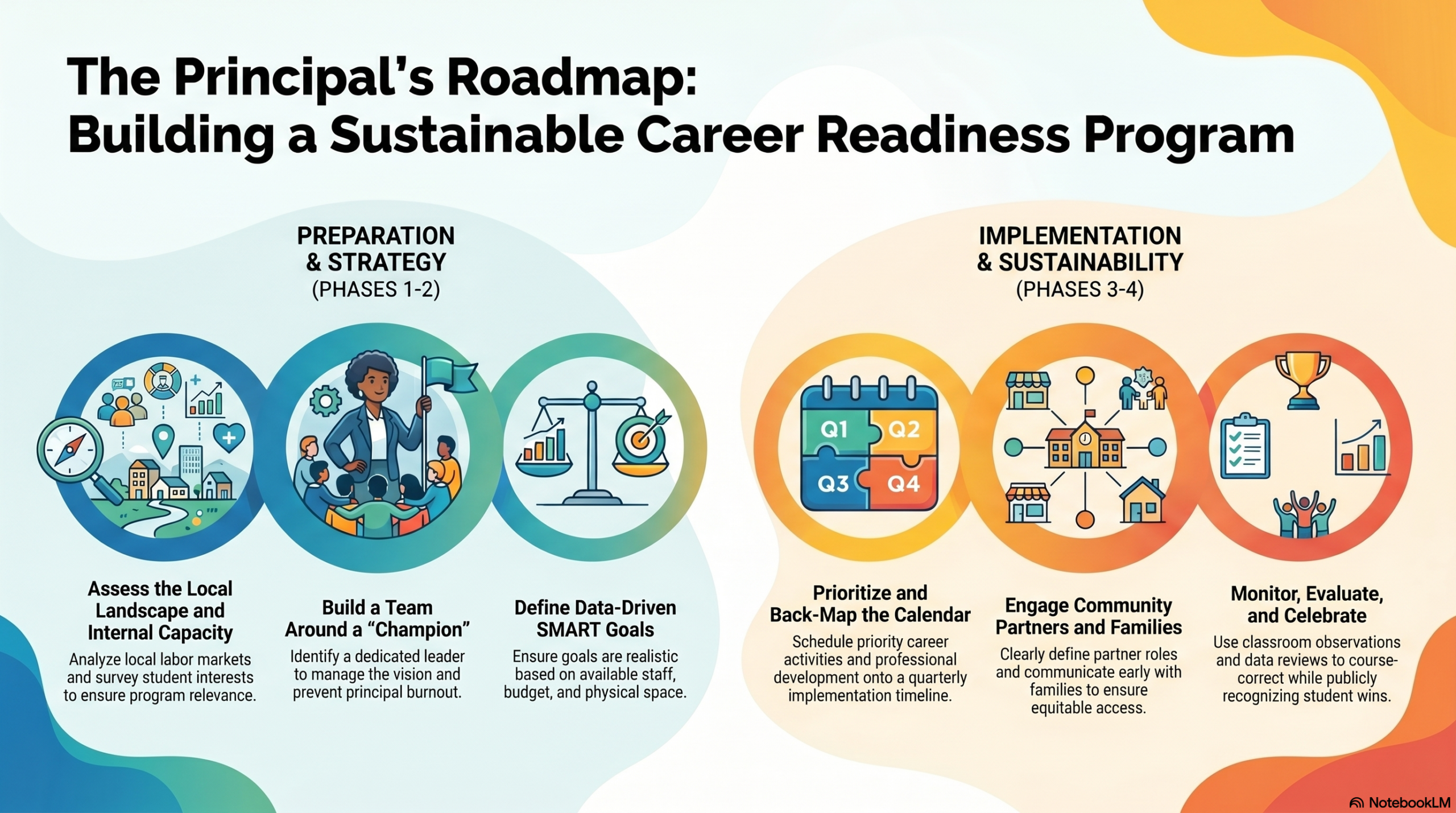
Realizing developing a career readiness program can be dauting. We’ve organized the process into the four phases. The phases are oganized below which highlights goals to pursue and questions to ask at each step of the process to develop a more robust, comprehensive career readiness program for your school. We’ve ogranized the goals and activities in a format meant to be accessible and user-friendly. While it does not provide a step-by-step how-to for each activity, the resource links offer further detailed guidance, practical examples, and case studies.
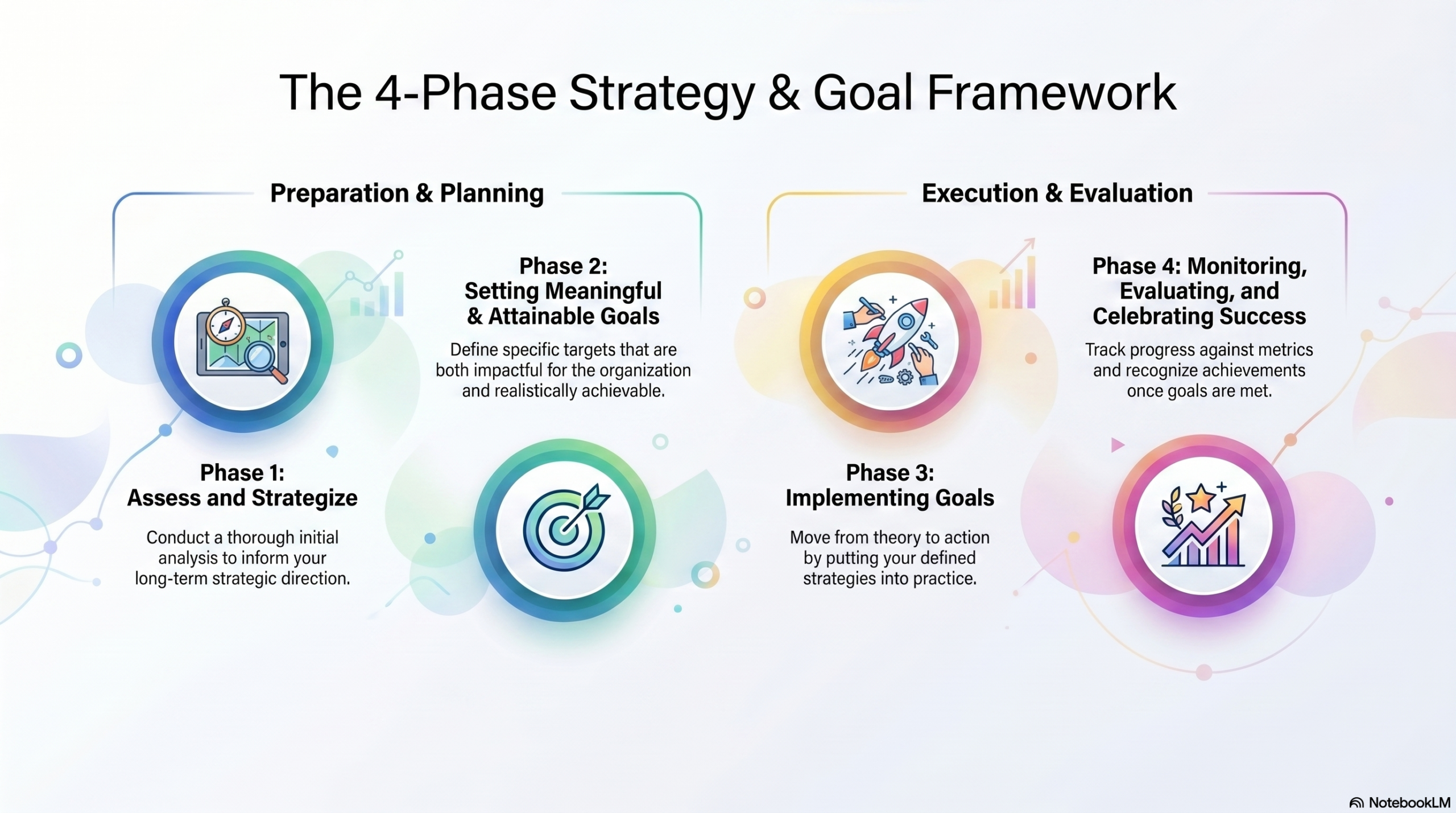
Click image to enlarge
Phase 1: Assess and Strategize
The first phase addresses the preliminary phases of vision casting, team building, and planning required to prepare for meaningful growth in the career readiness opportunities offered by your school. Learn more. . .

Phase 2: Set Meaningful & Attainable Goals
Setting meaningful and attainable goals is about working with the career readiness team to set specific goals based on the skills, pathways, and priorities agreed upon in the strategizing phase. Learn more. . .

Phase 3: Implement Plans
Implementing your goals is where the rubber meets the road! Your trusted team of change-makers will need to prioritize the items on their career readiness wish list. Learn more. . .

Phase 4: Monitor, Evaluate, and Celebrate Success
When student participation and achievements are recognized and celebrated, as well as staff engagement and community partnerships, stakeholders are encouraged to see the fruit of their efforts. Learn more. . .
Curated Resources
In this section we present a variety of evidence-based resources and tools to aid in developing your shcool’s career readiness program.
Assessing & Strategizing Resources
We’ve curated these resources to help address vision casting, team building, and planning required to prepare for meaningful growth in the career readiness opportunities offered by your school.
Engaging with local employers, business association, chamber of commerce, and higher ed institutions
- Engaging employers (CTE)
- Work-and-Learn in Action: Successful Strategies for Employers (National Network of Business and Industry Associations)
Examples
- West Virginia Alignment Between CTE Programs and the Labor Market
- Columbus Ohio, New Skills Ready Network
- Nashville, TN, New Skills Ready Network
- PA Career Ready Skills Toolkit
Evaluating current school-based offerings and capacities
- Work-based Learning Manual (FHI360)
- Evidence-Based Approaches to Designing Effective Career and Technical Education Programs (EdResearch)
- Forging Futures: The Next Generation of Pathways (EdStrategy)
- How To Use Data To Build Next Generation Career & Technical Education (SchoolLinks)
- Accelerate ED resources and reports
Examples
Assessing student interest and engagement
Working collaboratively to develop the vision
- Principal Playbook for Unlocking Career Success (All4Ed)
- Adopting a Whole School Approach to Career Development in High School (NCDA)
- Designing and Implementing a CTE Program in Your District (Edmentum)
Examples
- A School Leader’s Approach to Career Education (Edutopia)
- Portrait of a Graduate (Gwinnett Co. Public Schools)
Identifying specific, relevant career pathways or concentrations
Examples
- Massachusetts DESE
- Columbus, OH New Skills Ready Network
- Indianapolis, IN New Skills Ready Network
- FRNYC School Playbook (Future Ready NYC)
Structuring key partnerships
- Four Essential Best Practices for Engaging Partners and Practitioners to Advance Economic Mobility (WestEd)
- 6 Elements of an Effective Career Education Program (EdWeb.Net)
- 7 tips for schools to strengthen career and technical education programs (K-12 Dive)
- Partnerships in Practice: How to Engage With CTE Programs (JFF; resource for employers)
Focusing on key competencies
- Common Employability Skills Framework (National Network of Business and Industry Associations)
- What is “Career-Ready”? (ACTE)
- AVID College and Career Readiness Framework
- Competencies for a Career-Ready Workforce (NACE)
- 6 steps to a future-focused blueprint: Supporting students in making career decisions (K-12 Dive)
Examples
- Teaching Global Competencies through Children’s Stories (Participate Learning)
Goal Setting Resources
These resources help the career readiness team set specific goals based on the experiences, skills, pathways, and priorities agreed upon in the strategizing phase.
Identifing data-driven outcomes to be measured
Ensuring alignment of goals and objectives with assessment data
Internet Resources
- Braiding Funding to Support Equitable Career Pathways (Advance CTE)
- Funding and Finance Resources (Advance CTE)
- Blended and Braided Funding (Urban Institute)
Developing a continuous improvement cycle
Internet Resources
- Assessing the Quality and Reach of Student Pathways to Economic Security (The Research Alliance for NYC Schools, NYU Steinhardt)
Implementing Plans
These resources will help your team prioritize the items on their career readiness wish list, schedule opportunities for staff awareness and professional development, work with nonprofit and business community partners, communicate with students and their families about the new opportunities, and ensure that the proposed courses and activities are carried out as planned.
Planning and prioritizing with your school staff
Internet Resources
Examples
- Washington State Innovative CTE Teacher Certification Program
- Massachusetts DESE (Approved Career Clusters)
Collaborating with partners
Internet Resources
- Four Essential Best Practices for Engaging Partners and Practitioners to Advance Economic Mobility (WestEd)
- 6 Elements of an Effective Career Education Program (EdWeb.Net)
- 7 tips for Schools to Strengthen Career and Technical Education Programs (K-12 Dive)
- Partnerships in Practice: How to Engage With CTE Programs (JFF; resource for employers)
Communicating with students and families
Internet Resources
- Career Education Recruitment & Communication Toolbox (Advance CTE)
- Engaging Families and Learners (Advance CTE)
- Harnessing Data to Drive Equity (ACTE)
Resources for Specific Components of Career-Focused Education
See Raise the Bar : Unlocking Career Success from All4Ed
Professional development for school staff
Resources & Examples
- Washington State Innovative CTE Teacher Certification Program
- College/Career Access & Action Network (New Visions for Public Schools)
Career awareness and exploration activities
Career advising and navigation
Work-Based Learning
Resources & Examples
- Work-Based Learning Manual (FHI360)
- Making work-based learning work (JFF)
Career Academies
Resources & Examples
- Wake County Public Schools
- Pasadena Unified School District
- Chicago Achievement Academies (from the Everyone Graduates Center)
Dual Enrollment
Resources & Examples
Examples
Career Preparation Activities
Monitoring, Evaluating, and Celebrating Success
These resources help with continuous monitoring and evaluation of efforts and outcomes of the career readiness team to refocus, course-correct, and troubleshoot in real time, based on observed data and sometimes shifting circumstances.
Monitoring implementation of career-focus plans and programs
Internet Resources
- Work-Based Learning Data Collection Toolkit (Education Development Center)
- Career Readiness Metrics Framework (Advance CTE)
- Building Better Outcomes: A District Playbook for Effective Postsecondary Data Practice (EdStrategy)
- Assessing the Quality and Reach of Student Pathways to Economic Security (The Research Alliance for NYC Schools, NYU Steinhardt)
Celebrating success and recognize initiatives
Internet Resources
- Work-Based Learning Data Collection Toolkit (Education Development Center)
- Career Readiness Metrics Framework (Advance CTE)
- Building Better Outcomes: A District Playbook for Effective Postsecondary Data Practice (EdStrategy)
Designing Education
A podcast hosted by Robert Balfanz, director of the Everyone Graduates Center.
Conversations with leaders in education from around the country on bold new ideas and research-based strategies for redesigning American education to more effectively engage all students and equip them for the challenges of today’s workplace and world.