About OTCS
Goal
To create equitable outcomes and opportunities for historically underserved students, and to structure and support their experiences, leading to adult career success.
The On Track to Career Success (OTCS) project is an effort to co-create a framework that seamlessly combines elements of high school redesign, youth development and engagement, workforce development, and career preparation and readiness using evidence-based practices that build skills and open pathways to jobs and careers through educational and workplace experiences.
The OTCS project was co-designed with partner schools and communities to support all students, including the most underserved, to build a path to high school graduation, post-secondary schooling and/or training, and a career with a family-supporting wage. The project was launched in Albuquerque, New Mexico, and New Orleans, Louisiana.
The OTCS Framework was designed with students and educators. They were actively engaged in the development of a system of supports that, when implemented, improves high school graduation rates, especially among our highest needs students, and greatly increases the number of graduates who successfully continue their schooling or training and find employment.
OTCS Framework
Grade Level Milestones
Evidence-based academic, social-emotional, and college/career outcomes for students in grades 9-12. When met, these milestones indicate a student is on trajectory toward adult success.
Student Success Systems
Using the foundational indicators of agency, belonging, and connectedness as well as Early Warning Indicators such as attendance, behavior, and course performance to monitor student progress. Shifts student support from reactive to proactive.
Pathways to Career Success
Ensuring all students have meaningful college and career experiences, exploration, work-based learning, and internship opportunities.
Student Co-Design
Students take the lead in shaping ideas and strategies to make school a place where everyone feels welcome, supported, and motivated—working with adults to adapt milestones and “portraits of a graduate” to local needs.
OTCS At Work
New Mexico Project Highlights
On November 13, 2025 educators and students from New Mexico shared how they are bringing the On Track to Career Success framework to life in a virtual event.
Event Presenters:
- Robert F. Kennedy High School – Using the National Milestones to inform and co-create the Profile of a Graduate, capstone projects, and digital portfolios
- Mark Armijo Academy – Highlighting project strategies, outcomes, and best practices related to internships, work-based learning, and external community partnerships
- Grants Cibola County Schools – Designing the GCCS Profile of a Graduate
In partnership with the Annie E. Casey Foundation, schools across New Mexico have participated in the On-Track to Career Success project, customizing and implementing the OTCS framework, which is designed to guide high school students as they prepare for future career success.
- Schools in New Mexico developed targeted, grade-level milestones
- Collaborated with student design teams to refine their approach
- Partnered with community organizations to provide students with meaningful experiences that prepare them for success in college and the workplace.
Resources & Tools
Latest Resource
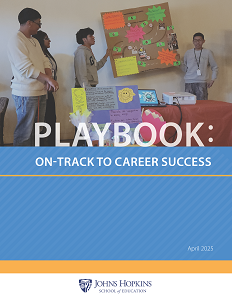
On Track to Career Success Playbook
This Playbook is designed primarily for secondary schools and their community organizations, higher education peers, and workforce partners. Our hope is that the Playbook serves as a practical and applicable resource for most types of school settings, including those that serve students from diverse socioeconomic backgrounds.
The Playbook is the result of engaging students and educators in the process of design thinking while aiming for greater equity through co-creation. The Playbook seeks to honor and value the voices of the students, families, community members, and school-based educators who collaborated with us in implementing elements of the OTCS with their communities.
The Playbook reflects collaborations with stakeholders across languages (English and Spanish), ethnic and racial identities, gender identity, age, and educational backgrounds (i.e., college- and non-college-educated caregivers). Furthermore, the Playbook highlights how students were able to articulate their perspectives and co-direct collective activities in co-designing the unique pathways for their school’s new learning environments.
The Playbook can be used as a guide for customized support and coaching of the OTCS Framework while adjusting for the realities of each landscape. You can co-design the paths that work best for your community as the Playbook offers tools and resources that help build the skills and capacities of students, educators, parents, and partners to enact the OTCS Framework.
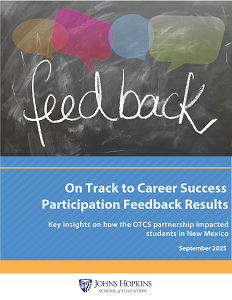
The On Track to Career Success Participation Feedback Results
On Track to Career Success has prepared The On Track to Career Success Participation Feedback Results. It reports the key insights on how the OTCS partnership impacted students in New Mexico.
The objective is to understand the experiences and the impact of participation, providing insights that will guide the evolution of the framework and its national implementation. The results may serve in shaping the future and ensuring it effectively supports broader use. Six school sites participated in the survey, including students, teachers, counselors, administrators, and key community partners.
Key Insights
- 100% of respondents feel that the program improved student engagement
- 91% of respondents indicated an increase in student participation in college/career activities
- 82% of respondents shared an increase in connections made between students and school/community/employment partners
- 73% of respondents reported the greatest impact was the use of the National Milestones to improve college and career readiness
Pandemic Insights: Reflections from the On Track to Career Success Project
After extensive planning and work building multiple partnerships, the On Track to Career Success (OTCS) project was launched in Albuquerque, New Mexico, and New Orleans, Louisiana in early 2020. The OTCS project works with partner schools and communities to create a framework to support all students, including the most marginalized, on a path to high school graduation, post-secondary schooling and/or training, and a career with a family-supporting wage.
At about the same time, the COVID-19 pandemic hit and disrupted so much of our lives. Carefully designed plans were pushed aside amid new health restrictions. The next two years were defined by uncertainty and stress, as schools moved to online instruction and then hybrid schooling, forcing educators, nonprofit partners, and community members across the country to reimagine education. Such challenges were perhaps steeper at the OTCS schools, which serve Black, indigenous, and other people of color in historically underserved communities that were among the hardest hit by the pandemic.
Despite these challenges, five key insights were gleaned from the project’s first two years and are summarized in the report, Pandemic Insights: Reflections from the On Track to Career Success Project, and will be of value to educators, funders interested in systemic educational reform, workforce providers, researchers, and others:
- Schools Play a Critical Role Connecting Students and Staff — An Essential Building Block for Emotional Well-Being and Success
- Relationship Building and a Focus on People’s Well-being are Essential
- Flexibility and Adaptation are Necessary Ingredients
- Building and Sustaining Partnerships Requires Ongoing Work and a Shared Context
- The Pandemic Promoted Rich Conversations as Schools Looked for New Solutions
Co-Designing with Students
This report highlights:
- The three elements of the OTCS framework that have guided collaborations with school partners:
- Milestones: evidence-based academic, social-emotional, college and career milestones for students in grades 9-12
- Student Success Systems: to monitor and respond to keep all students on the path to career success.
- Pathways to Career Success: providing all students with a series of college and career explorations, experiences, applications, and engagements.
- Case studies that illustrate collaborations with school partners and describe lessons and challenges faced by their school communities.
- The processes and methodologies that guided each school’s individual co-created implementation efforts.
- The resources that are at the heart of the project’s efforts to co-design with students and the educators, families, and communities who support them.
This paper will be of value to educators, funders interested in systemic educational reform, workforce providers, researchers, higher education leaders, and other community-based partners.
The OTCS project involves systems change work that usually starts with policy makers, business leaders, and school district administrators. The OTCS is upending this practice by uplifting and valuing the voices of students, families, community members, and school-based educators as co-designers and co-creators of future pathways.
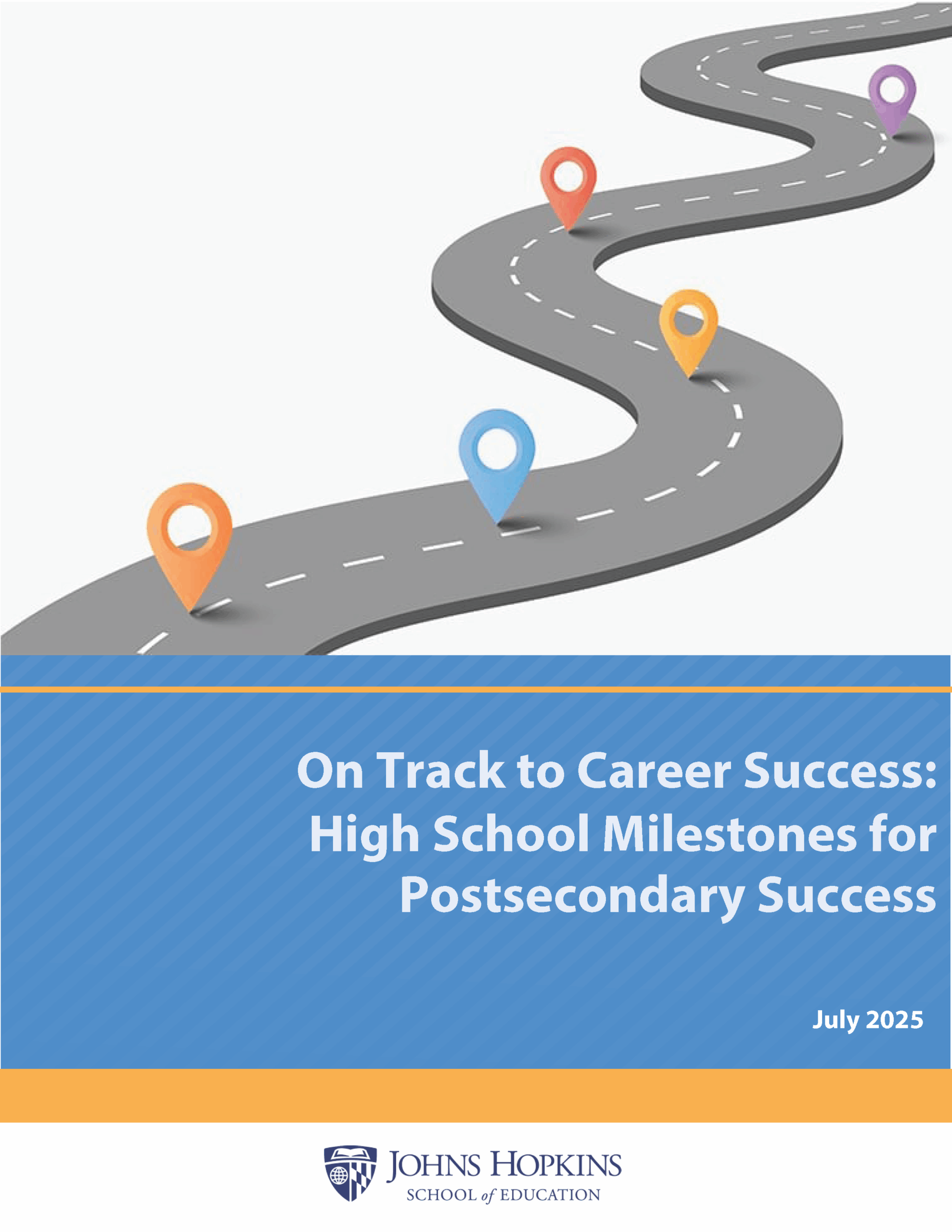
High School Milestones for Postsecondary Success
The Everyone Graduates Center at Johns Hopkins University, along with a group of high school teachers from across the nation, co-developed a draft set of 9th-12th grade college and career readiness milestones. The milestones consist of evidence-based, grade by grade (9-12), academic and school success experiences, life skills, motivating interpersonal relationships, and postsecondary preparations. Reaching each grade’s milestones increases the likelihood of students making informed decisions about their postsecondary plans as well as being prepared to succeed in their chosen pathways. Distributing the milestones across grades 9-12 engages the whole school in the vital work of putting all students on a pathway to adult success.

Beyond the Classroom: Education That Prepares for Adult Success
Listen to the episode the Designing Education podcast hosted by Robert Balfanz that features Shawn Morris, Executive Director of the Mark Armijo Academy located in the South Valley of Albuquerque, New Mexico.
This episode explores how the Mark Armijo Academy is helping students take ownership of their futures through internships and work-based learning. The conversation touches on the changing landscape of work, the decline of traditional career pathways, and the urgent need for schools to adapt by offering students meaningful exposure to modern opportunities.
Designing Education
A podcast hosted by Robert Balfanz, director of the Everyone Graduates Center.
Conversations with leaders in education from around the country on bold new ideas and research-based strategies for redesigning American education to more effectively engage all students and equip them for the challenges of today’s workplace and world.